Custom LLM and API Integration into Legacy Systems
Getting a language model or a modern API to work with the older system at the centre of your business, without rewriting that system. The new capability sits in an adapter layer, with rate limits, cost caps, and a defined fallback for when the external service is down.
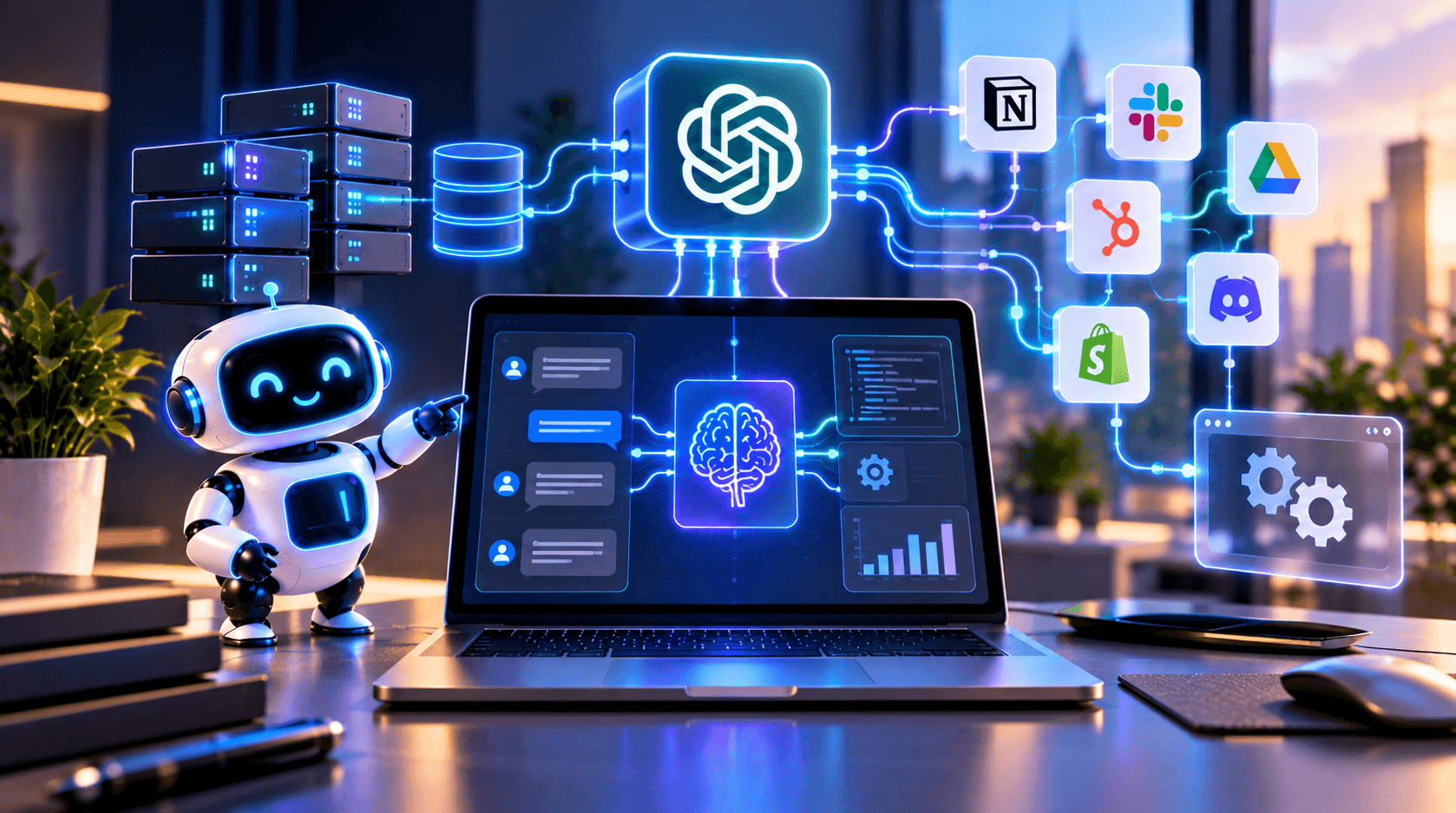
The core system is old, and it still cannot be touched
The system that runs the business is often years old, poorly documented, and risky to change, which is exactly why teams avoid connecting anything new to it. But the value of an AI feature or a modern API usually depends on it reaching that core data. The way through is an integration layer that sits between the two: it talks to the legacy system in the limited, safe ways that already work, and exposes a clean interface to the new service, so the core is never modified and a failure in the new part cannot reach it.
What we build
- An adapter layer that connects to the legacy system through its existing, supported interfaces only
- Integration with the language model or API, kept behind that layer so the core system is untouched
- Prompt and response handling built for your data, with validation on what goes in and comes back
- Rate limits and hard cost caps so usage cannot run away
- A defined fallback for when the external service is slow or unavailable
- Monitoring for cost, latency, and error rate, with alerts on anything abnormal
How the work runs
- 1
Map the seam
2–3 daysWe find the safe, supported ways in and out of the legacy system and design the adapter layer around those.
- 2
Build the layer
1–2 weeksThe adapter is built and tested against the legacy system in isolation, with no changes to the core.
- 3
Wire in the model or API
3–5 daysThe external service is connected behind the layer, with input validation, cost caps, and a fallback path.
- 4
Test the failure modes
2–3 daysWe deliberately break the external service in testing to confirm the core system carries on unaffected.
- 5
Release and monitor
1 day, then ongoingThe integration goes live with monitoring on cost, latency, and errors, and alerts wired to your team.
How we deliver
- 1
Discovery & Scoping
1-3 daysWe start by understanding the actual problem and your existing systems, not just the brief.
- 2
Architecture & Plan
2-4 daysWe map the technical approach and integration points before any code gets written.
- 3
Build
1-8 weeks, scoped to your projectAI-augmented development that moves fast without skipping review.
- 4
Test & Launch
2-3 daysReal testing against real scenarios before it touches a live user.
- 5
Tune & Support
OngoingWe monitor and refine in the weeks after launch. This isn't a handoff and disappear.
What you get out of it
- A modern capability reaching your core data without the core being changed
- A hard ceiling on what the integration can cost
- Predictable behaviour when the external service fails
- A reusable layer that the next integration can build on
Questions we get about this
No. The integration only uses the interfaces the legacy system already supports. The new code lives in a separate layer, so the core is not changed and cannot be broken by the integration.
Ready to scope custom llm and api integration into legacy systems?
Send us the details of your setup: the tools, the volume, the workflow. We'll come back with an honest assessment and a fixed quote.