Personalization Engines
The store adapting to who is looking: homepage content, category order, search ranking, and offers that shift by segment and by visit, inside rules you set, with a sensible default for visitors you know nothing about yet.
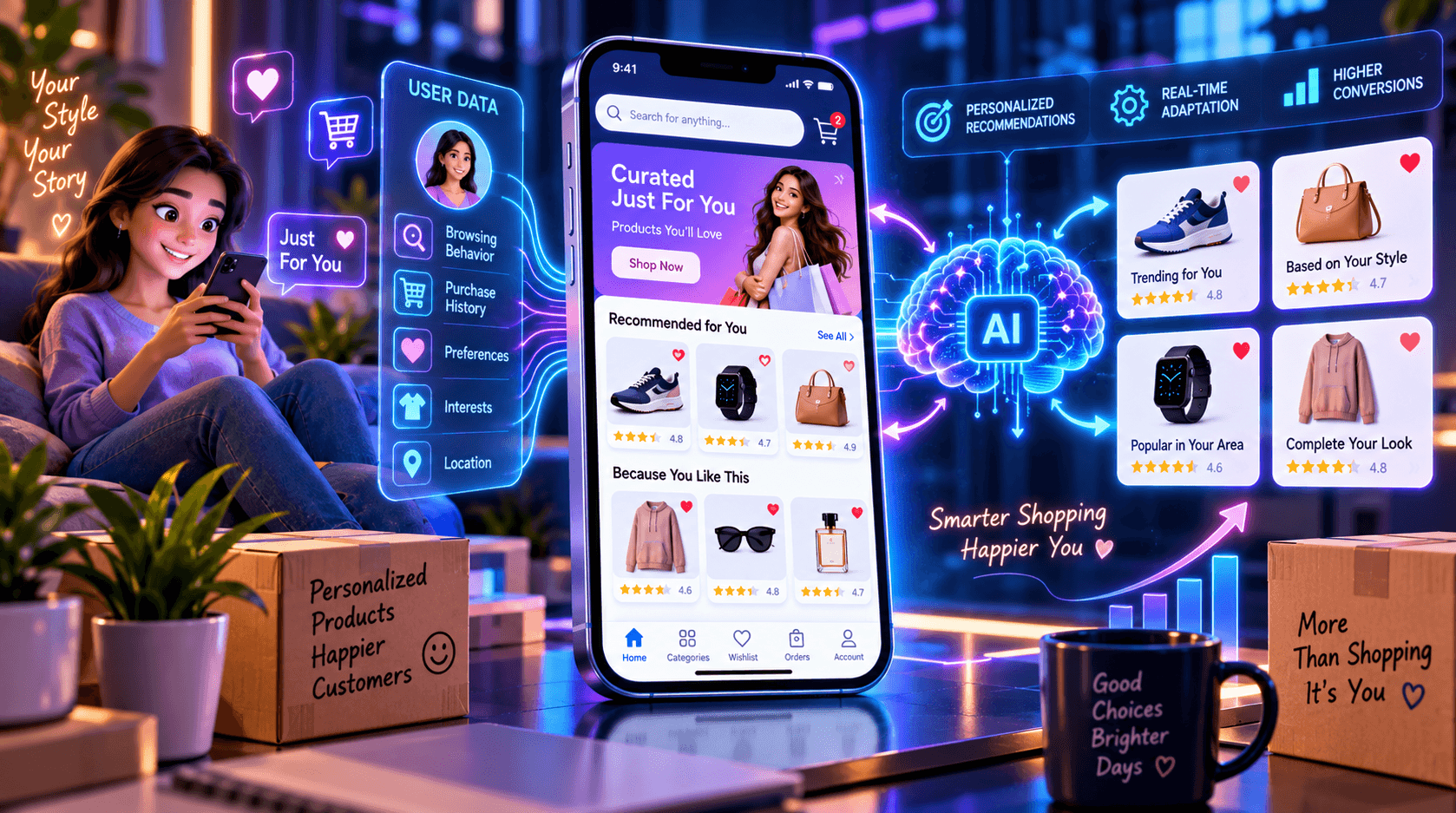
One storefront for every visitor wastes most visits
A first-time bargain hunter, a loyal repeat buyer, and someone back only to check a delivery all see the same homepage, the same category order, and the same offers. Each of those visits could go better with content that matches intent. Personalization does that, but it goes wrong when it is creepy, when it hides products people want, or when it has no answer for a brand-new visitor. It has to be built with rules, limits, and a solid default.
What we build
- Visitor segments from behaviour, purchase history, traffic source, and lifecycle stage
- Homepage and landing content that re-ranks per segment against your rules
- Category and search result ordering weighted by what a visitor engages with
- Offer and content targeting with frequency limits and exclusions
- A defined default experience for new and unidentified visitors
- A measurement setup that compares personalized against a control group, not just raw totals
How the build runs
- 1
Define segments
2–3 daysWe agree the segments that actually matter for your store and how each is identified from available data.
- 2
Choose what varies
2–3 daysWe pick the specific blocks, orderings, and offers that get personalized, and lock everything else.
- 3
Set rules and defaults
2–3 daysExclusions, frequency caps, and the fallback experience for unknown visitors are defined before launch.
- 4
Build and integrate
1–2 weeksThe engine is wired into the storefront so variations render fast and degrade cleanly if it is unavailable.
- 5
Measure against control
OngoingA holdout group stays on the default so the effect of personalization is measured, not assumed.
How we deliver
- 1
Discovery & Scoping
1-3 daysWe start by understanding the actual problem and your existing systems, not just the brief.
- 2
Architecture & Plan
2-4 daysWe map the technical approach and integration points before any code gets written.
- 3
Build
1-8 weeks, scoped to your projectAI-augmented development that moves fast without skipping review.
- 4
Test & Launch
2-3 daysReal testing against real scenarios before it touches a live user.
- 5
Tune & Support
OngoingWe monitor and refine in the weeks after launch. This isn't a handoff and disappear.
What you get out of it
- Returning visitors landing on content that fits why they came
- Search and category pages ordered toward what each visitor responds to
- Offers targeted with limits, so they stay relevant instead of constant
- A control group that shows whether personalization is actually helping
Questions we get about this
The default storefront you define. Personalization only layers on once there is a signal to act on, whether that is on-site behaviour in the session or a recognised returning customer.
More in AI-Powered E-Commerce
Ready to scope personalization engines?
Send us the details of your setup: the tools, the volume, the workflow. We'll come back with an honest assessment and a fixed quote.