One basket, a parcel per shop: a marketplace shoppers can trust
Haat brings 14 independent Indian shops into one storefront, with the shop, its record and a real arrival date visible on every product.
- Project
- Portfolio demo
- Type
- Multi-vendor marketplace
- Services
- UX, Design, Development
- Stack
- Next.js, Vercel
Marketplaces live or die on trust.
Haat is a marketplace concept for independent Indian shops, from Moradabad brassware to Malabar spices. A shopper buying from a stranger has two questions the product page must answer: who is actually selling this, and when will it arrive? So every product names its shop, each shop's rating and on-time record come from Haat orders rather than its own claims, and a basket splits into one parcel per shop, each with its own arrival date.
- Shopper, seller and admin roles
- Per-shop parcels
- Delivery dates by pincode
- independent shops
- 14independent shops
- departments
- 8departments
- free-delivery line, per parcel
- ₹499free-delivery line, per parcel
- to return after delivery
- 7 daysto return after delivery
Six pieces that make strangers comfortable buying
Every feature below is visible on the live build.
Departments, search and shelves
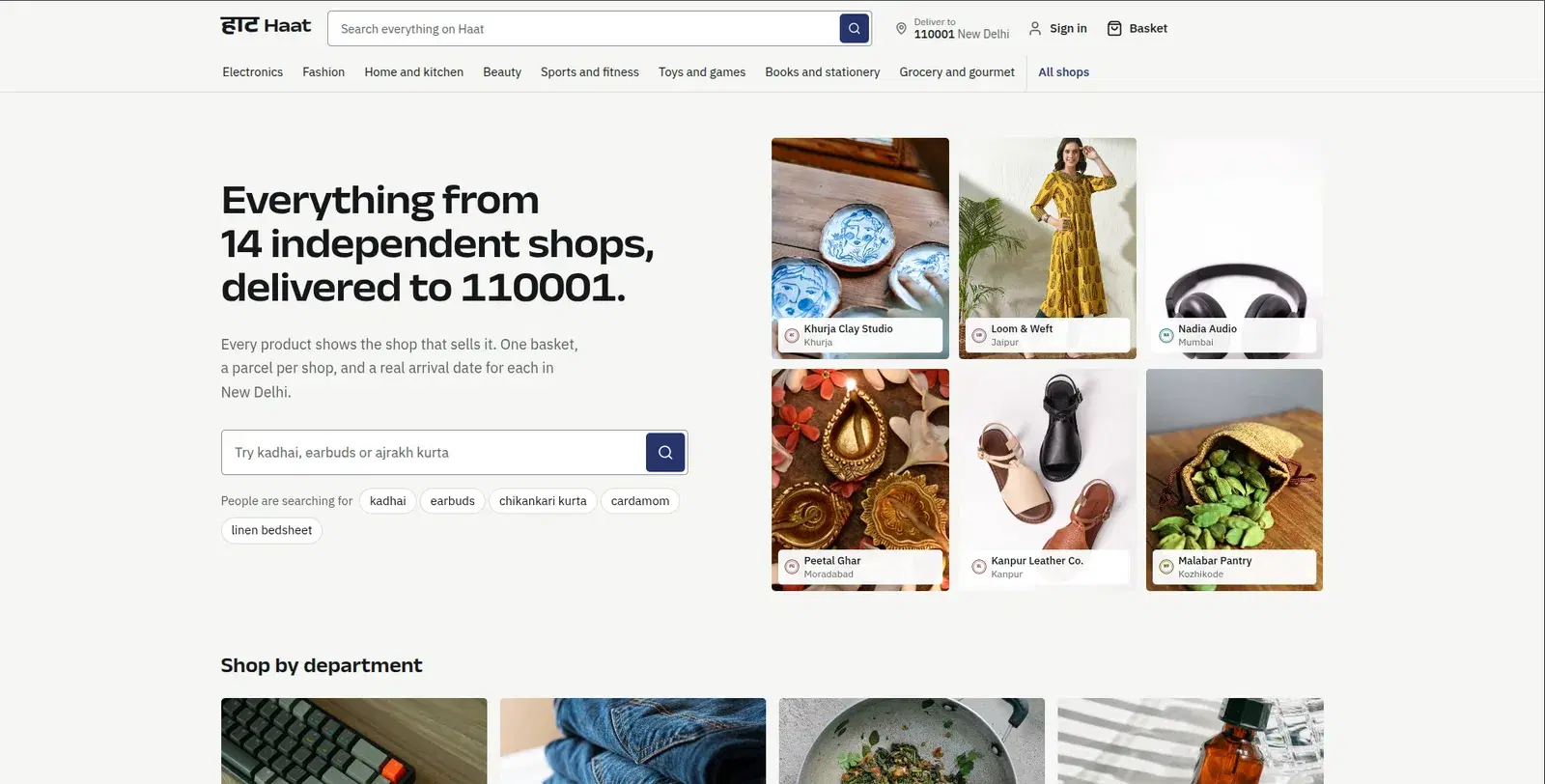
Eight departments, a search box with trending queries, and curated shelves such as Most bought this week, Good things under ₹499 and New on Haat.
Shoppers can browse or search their way in
The shop on every product
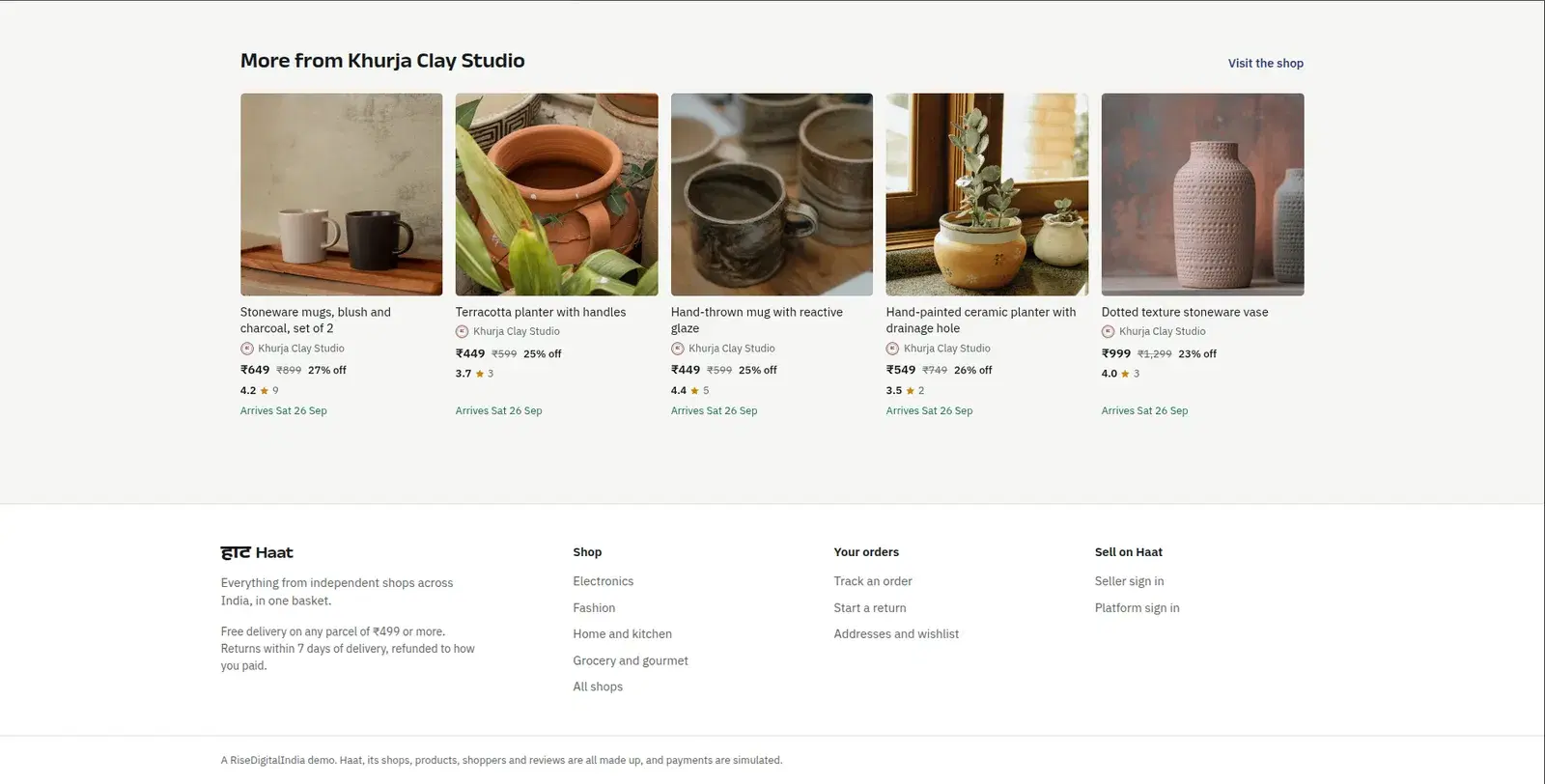
Product cards name the shop and its city. Shop pages show a rating and a "Ships on time" percentage, both drawn from Haat orders.
Reputation comes from order data, not claims
Arrival dates by pincode
Shoppers set a delivery pincode and every product card shows a real arrival date, plus low-stock nudges such as "only 3 left".
"When will it get here?" answered before the click
One basket, a parcel per shop
Items from different shops check out together but ship as separate parcels, each with its own date. Free delivery is judged per parcel.
Marketplace logistics, explained honestly
Orders, returns and account
Track an order, start a return within 7 days of delivery (refunded to how you paid), and keep addresses and a wishlist.
Clear return terms, stated up front
Seller and platform sign-ins
Separate sign-in routes for sellers and platform admins sit alongside shopper accounts, so the marketplace has a supply side as well as a storefront.
Three roles, three entry points
From one basket to three parcels
Shops ship on their own, so the basket shows what really happens: a parcel per shop, each with its own date and its own delivery threshold.
A marketplace product page has two jobs: say who is selling, and say when it arrives. Haat puts both on every card, so a shopper never has to click through to find out before deciding to trust it.
The storefront in use
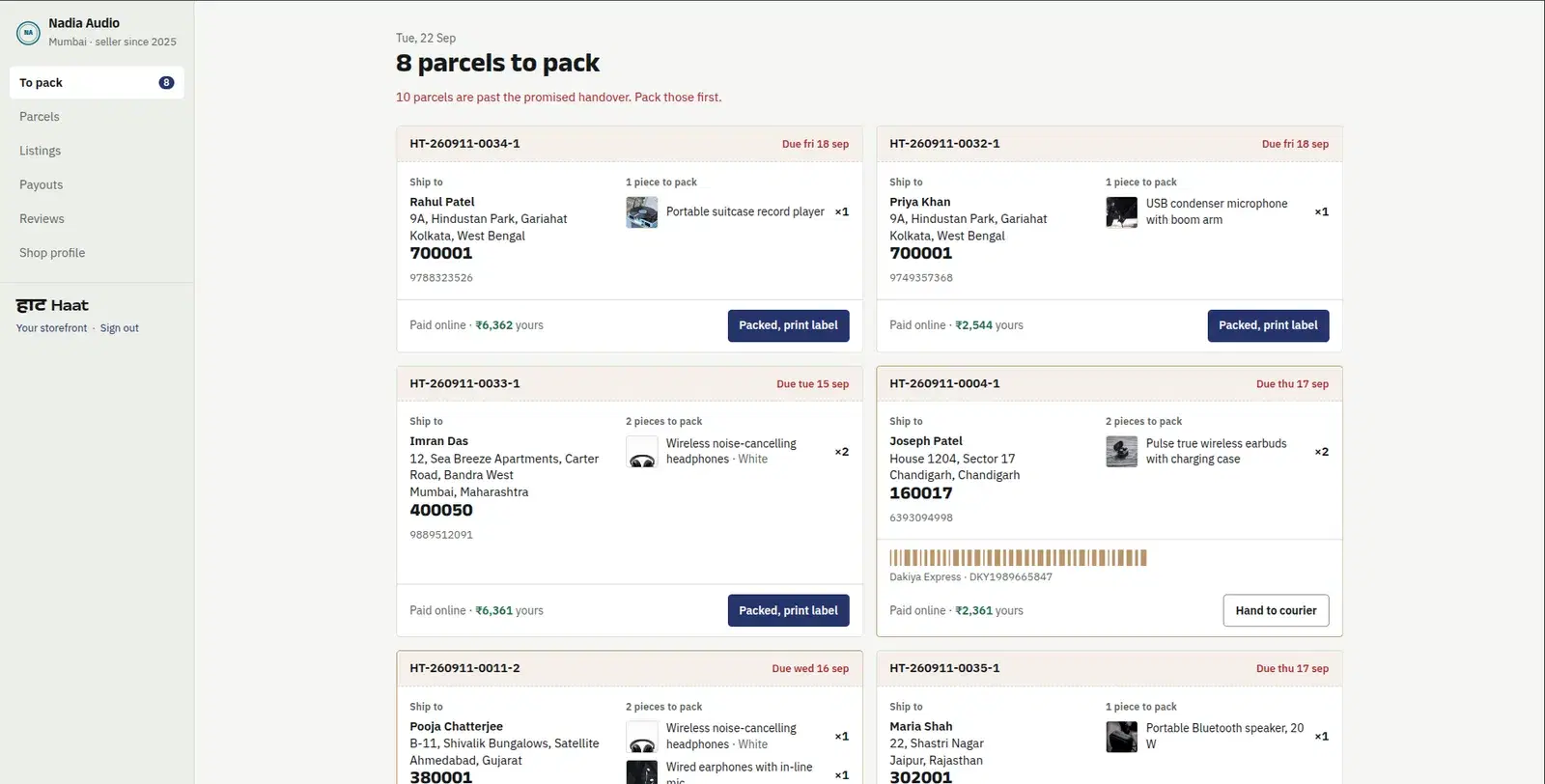
The seller and platform side
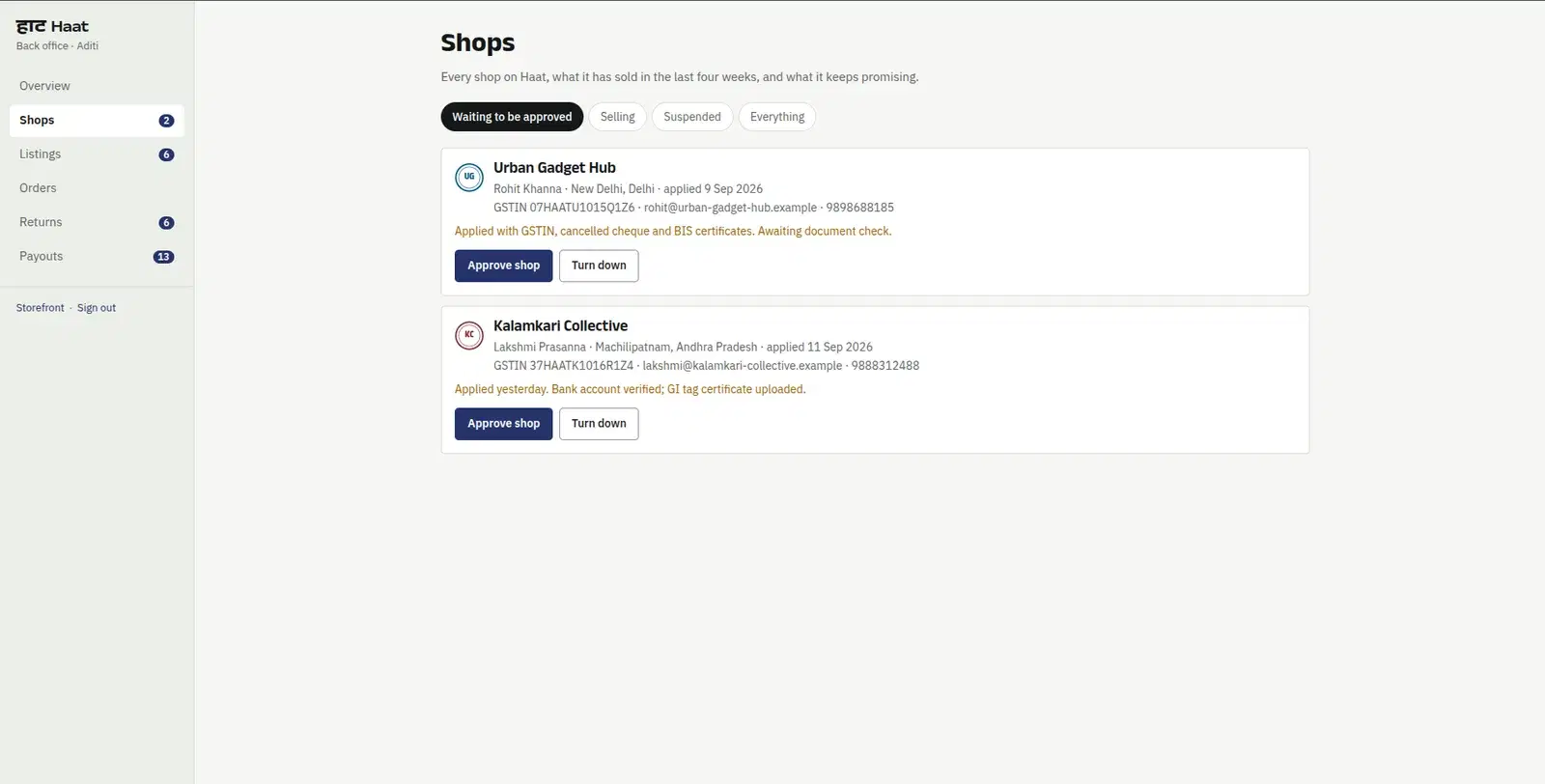
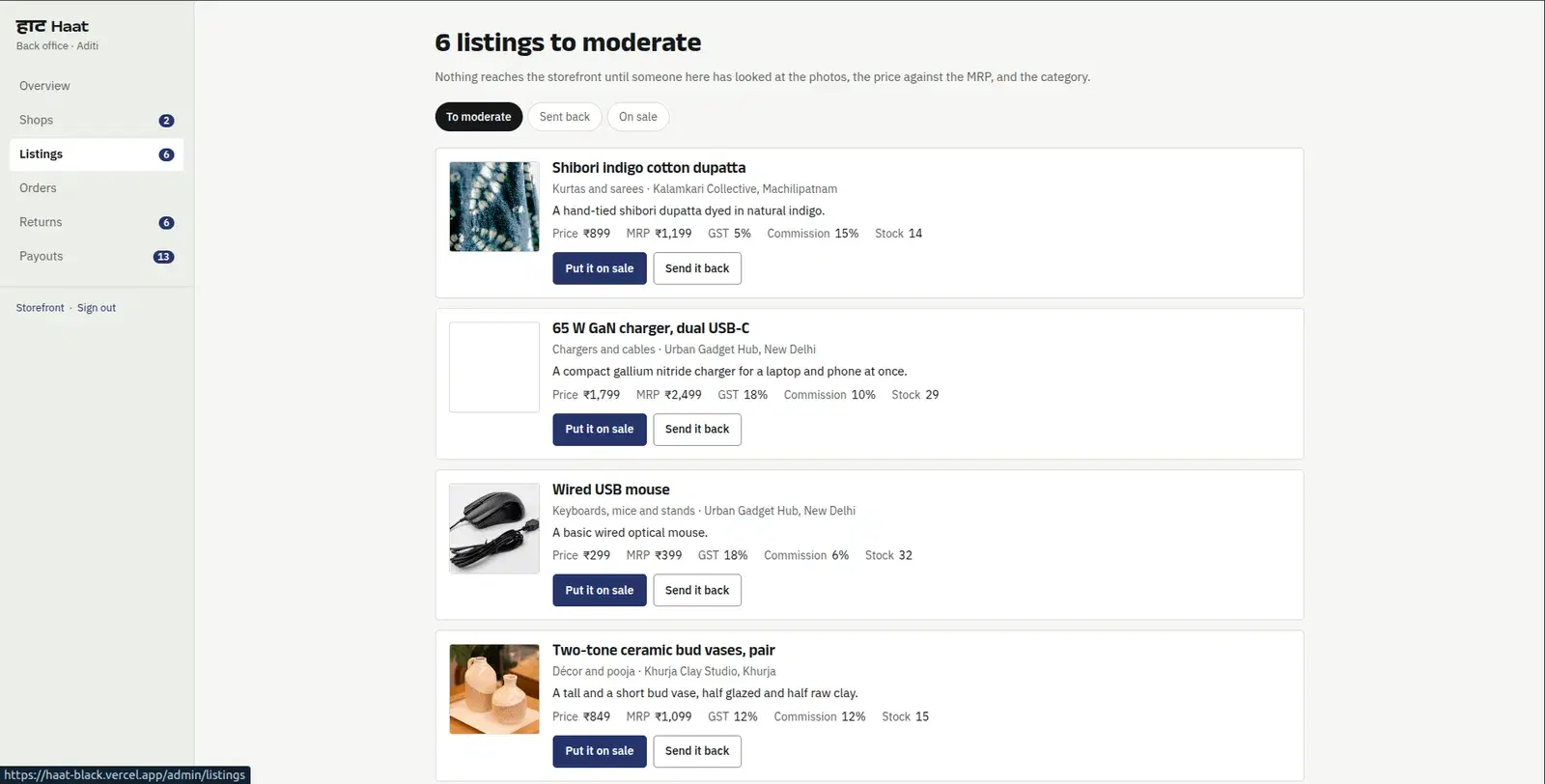
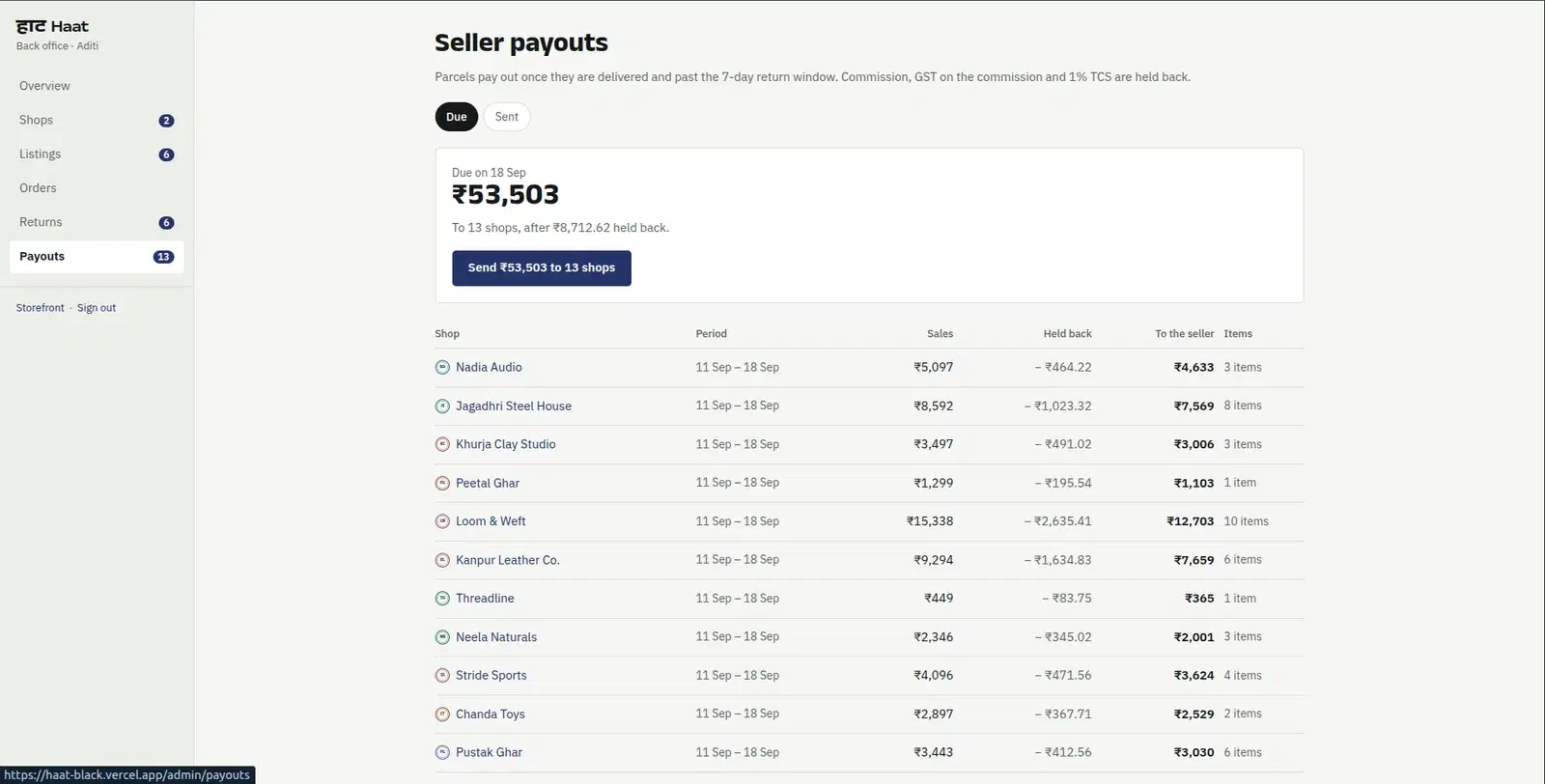
Every shop on Haat goes through a document check before it can sell, every listing is moderated before it reaches a shopper, and every shop is paid out on its own schedule.
What ships with Haat
- Search with trending queries
- Eight department pages
- Product pages with MRP, discount, rating and arrival date
- Shop directory and individual shop pages
- Basket with a parcel per shop
- Order tracking and 7-day returns
- Addresses and wishlist in the account area
- Seller and platform admin sign-in
More Case Studies
- Testing in Production: QA Test Cases from Building DIAREV
- Anatomy of a Production Outage: Debugging DIAREV's Multi-Cause Incident
- QA Test Cases: Auditing a Sourcing Platform's Website Before Launch
- Angeethi: A Restaurant Operating System from Table QR to GST Bill
- NestPG: One Platform for Finding a PG and Running One
- See all case studies